
Glaciers & Global Warming – Its Effects on Pakistan
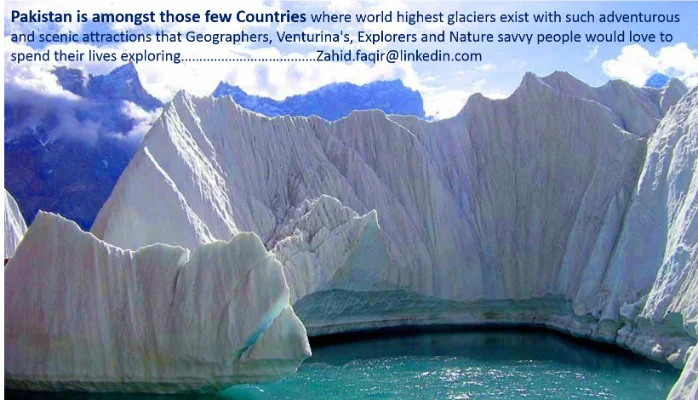
Pakistan is one of the few countries in the world with an exceptionally large concentration of glaciers outside the polar regions. Effects of these glaciers & global warming are devastating for Pakistan. The northern areas, particularly the Hindu Kush, Karakoram and Himalayan mountain ranges, contain thousands of glaciers that are an important natural source of freshwater. These glaciers are not only a spectacular part of our environment; they also play a critical role in supporting agriculture, drinking water, hydropower and ecosystems across Pakistan.
Global warming is increasingly affecting the delicate balance between glacier accumulation and glacier melting. It is sometimes suggested that the Sun is becoming hotter or that depletion of the ozone layer is the main reason for today’s rising temperatures. However, these are not the principal causes of current global warming. The major driver is the increasing concentration of greenhouse gases—such as carbon dioxide and methane—largely resulting from human activities including fossil-fuel consumption, industrial processes, transportation, deforestation and changes in land use.
As temperatures rise, glaciers can experience increased melting, changes in snowfall patterns and altered seasonal water flows. In Pakistan, this creates a complex situation. In the short term, accelerated glacier melting can increase water flow into rivers and create additional risks from Glacial Lake Outburst Floods (GLOFs). A glacial lake can form as meltwater accumulates behind unstable ice or rock barriers. If such a barrier fails, a large volume of water can suddenly move downstream, threatening communities, roads, bridges, agricultural land and other infrastructure.
Sun is getting hotter ..haha Or should we say that depletion of Ozone is making it more hot these days.
One of the effect is on glaciers.
The balance between icing and melting is getting effected.
we must take proactive measures to construct a balance between environmental affects caused by our organizational activities and mitigation strategies that help to improve our environment.
In the longer term, continued glacier loss can become a serious water-security concern. Pakistan’s economy and population depend heavily on the Indus River system, and snow and glacier melt contribute significantly to river flows, particularly during warmer and drier periods. If glaciers continue to lose mass over the long term, the natural water-storage capacity provided by these frozen reservoirs may decline, potentially affecting agriculture, drinking-water availability and hydropower generation.
The issue also has an important organizational and HSE dimension. Industries, businesses and infrastructure projects consume energy and resources and can contribute directly or indirectly to greenhouse-gas emissions. Organizations therefore have a responsibility to identify their environmental impacts and implement practical mitigation measures. Energy efficiency, renewable energy, responsible transportation, waste reduction, sustainable procurement and effective environmental management systems can all contribute to reducing an organization’s environmental footprint.
We may not be able to control global climate patterns individually, but we can control the environmental impact of our own activities. The objective should be to create a better balance between economic activity, environmental responsibility and climate resilience.
Climate change is not only a future environmental issue. For Pakistan, it is already connected with water security, extreme weather, infrastructure resilience, agriculture and community safety.
If you wish to add or comment, please do so for improving the learning and spreading awareness.
Have a question about this topic?
Get in Touch